In This Article
Thailand's Equivalent of the DMV Is the DLT
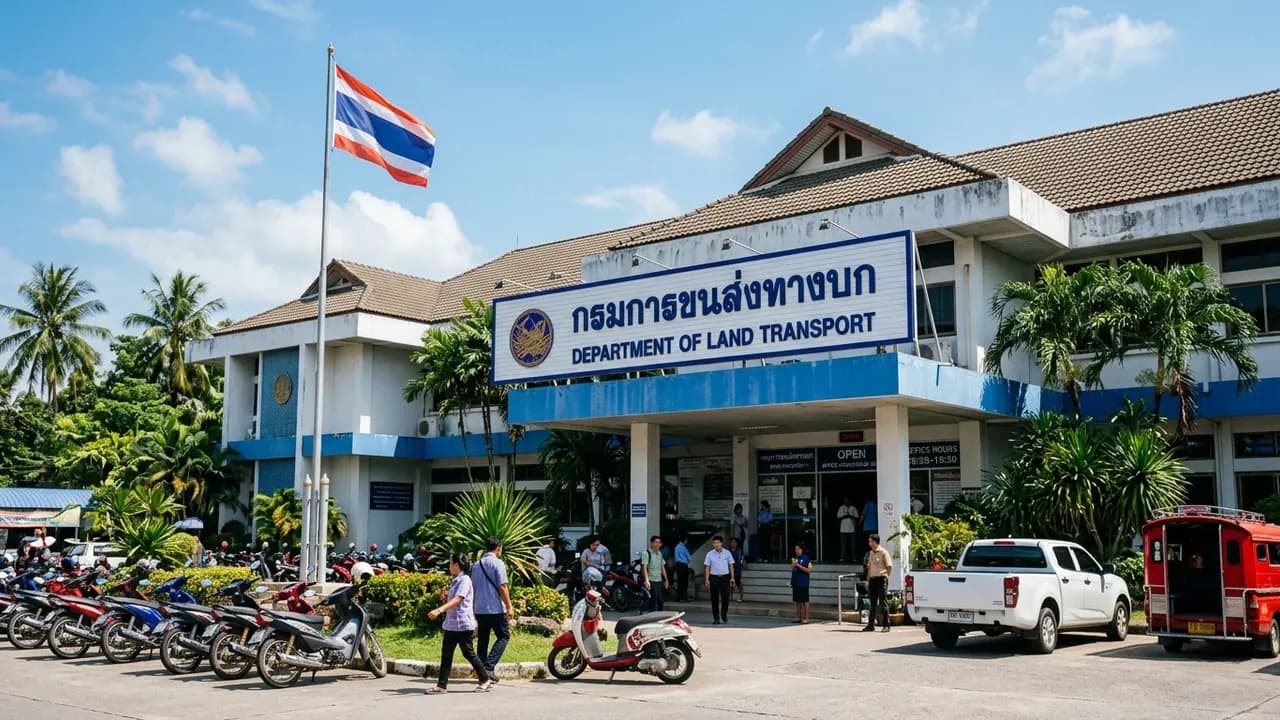
If you are from the United States and searching for the 'DMV in Thailand,' what you are looking for is the Department of Land Transport, commonly abbreviated as DLT. In Thai, it is called กรมการขนส่งทางบก (Krom Kan Khon Song Thang Bok). The DLT performs all the same core functions as the DMV: issuing and renewing driving licenses, registering vehicles, collecting road tax, and conducting vehicle inspections. There is no separate agency called the 'DMV' in Thailand. Canadians, Australians, Brits, and other foreign nationals will also use the DLT — whether your home country calls it the DMV, DVLA, RTA, SAAQ, or something else, the DLT is the one-stop agency for all driving and vehicle matters. The DLT has offices in every province across Thailand, and unlike many countries where you must visit a specific office based on your address, in Thailand you can generally visit any DLT office nationwide for most services.
What Services the DLT Provides
The DLT provides essentially the same services as the US DMV, though the processes differ. Driving licenses: the DLT issues Thai driving licenses for cars, motorcycles, and commercial vehicles. Foreigners can either take the full test (written and practical) or convert a valid foreign license. First-time Thai licenses are temporary (valid for two years), then converted to a five-year license upon renewal. Vehicle registration: new vehicles must be registered at the DLT, which issues the green book (equivalent to a vehicle title). Vehicle transfers, modifications, and deregistration are also handled here. Road tax: the annual vehicle registration renewal, similar to annual registration fees in the US. Vehicle inspections: mandatory for vehicles over seven years old, checking brakes, lights, emissions, and overall safety. International driving permits: the DLT issues IDPs to holders of a 5-year Thai driving license who are planning to drive abroad — a 2-year temporary license is not eligible. The DLT does not handle traffic tickets (that is the police), car insurance (private companies), or road construction (Department of Highways).
Key Differences from the US DMV
While the DLT and DMV serve similar functions, there are important differences. Queue system: the DLT uses a numbered queue system. You take a number, wait in a designated area, and are called when it is your turn. Arrive early — many offices limit daily applications. No appointment required but recommended: while walk-ins are accepted, the DLT Smart Queue app lets you book an appointment, which is highly recommended. Language: most forms and signs are in Thai. Some officers speak English, but bringing a Thai-speaking friend is helpful. Testing: the written test for foreigners is available in English (and several other languages) at most offices. The practical driving test is the same as for Thai nationals. Medical certificate: unlike the US where a doctor's note is rarely needed for a standard license, Thailand requires a medical certificate from a clinic or hospital for every license application and renewal. The cost is typically 100 to 200 THB. Fees: DLT fees are dramatically lower than US DMV fees. A five-year car license costs 505 THB (approximately 15 USD). A motorcycle license costs 255 THB. Processing time: most services are completed in a single visit, often within two to four hours.
Make sure you are properly licensed
The most important step before driving in Thailand is having a valid license. We handle the entire process for you.