In This Article
Thailand Drives on the Left
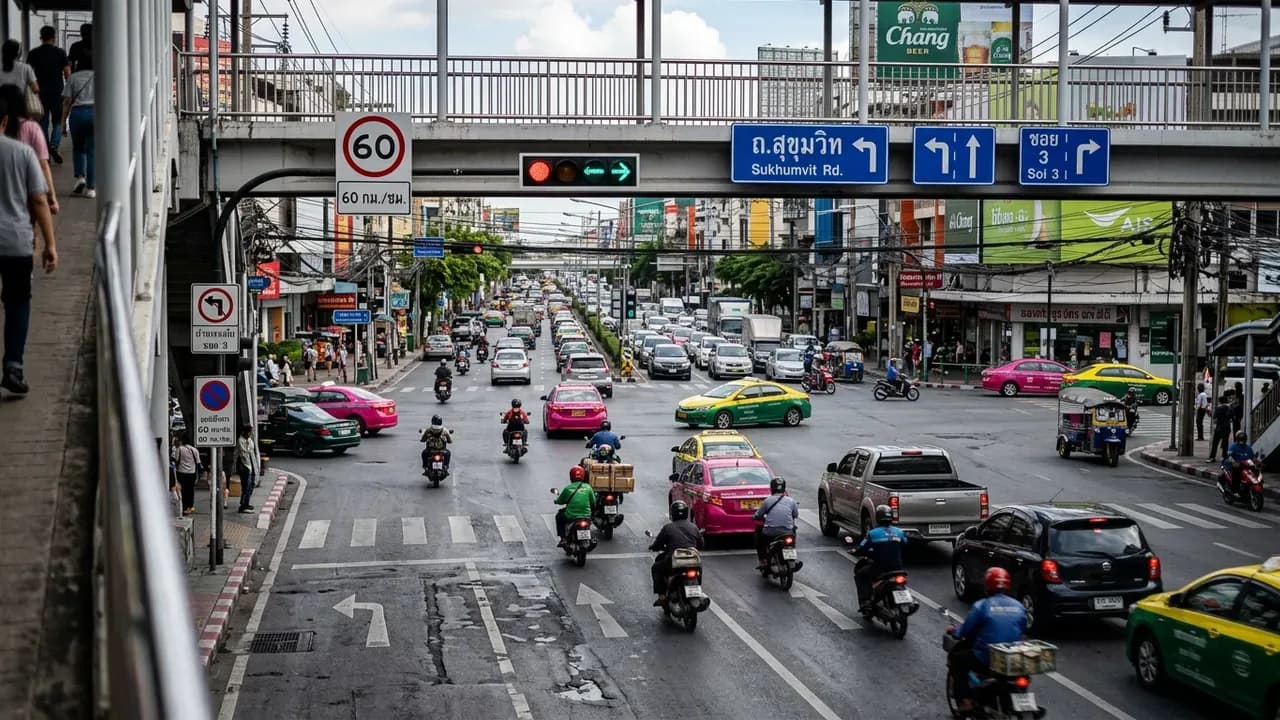
Thailand is a left-hand drive country, meaning you drive on the left side of the road and the steering wheel is on the right side of the car. This is the same as the UK, Australia, and Japan, but opposite to the US and most of Europe. If you are accustomed to driving on the right, take extra care at intersections, roundabouts, and when overtaking. The most dangerous moments for right-side drivers are turning — you instinctively look the wrong direction.
Speed Limits
Default speed limits in Thailand are: 60 km/h in urban areas, 90 km/h on rural highways, and 120 km/h on motorways (expressways). However, posted speed limits may differ and should always be followed. Speed cameras are increasingly common, especially on major highways. In practice, many Thai drivers exceed speed limits, but as a foreigner, you should follow posted limits strictly — especially since insurance claims may be denied if you were speeding.
Right of Way Rules
At unmarked intersections, vehicles approaching from the right have priority. However, in practice, many Thai drivers follow the 'bigger vehicle has right of way' convention, which is not legally correct but commonly observed. At roundabouts, vehicles already in the roundabout have priority. When turning left, yield to oncoming traffic. U-turns are common on Thai roads and are made at designated U-turn points on divided highways.
Rules That May Surprise You
Turning left on red is generally not allowed unless there is a designated green arrow. Motorcycles are supposed to travel in the leftmost lane on multi-lane roads. Seat belts are mandatory for front-seat passengers. Child car seats are legally required for children under 6 years old (enforcement is increasing). Using a mobile phone while driving is illegal and carries a fine. Driving barefoot is technically not illegal but not recommended.
Make sure you are properly licensed
The most important step before driving in Thailand is having a valid license. We handle the entire process for you.