In This Article
Yes, Foreigners Can Drive in Thailand
Foreigners are permitted to drive in Thailand provided they hold the appropriate documentation. There are three ways a foreigner can legally drive in Thailand: with a Thai driving license obtained from the Department of Land Transport (DLT), with a valid International Driving Permit (IDP) issued by their home country alongside their original domestic license, or — in limited circumstances — with their home country driving license alone (though this last option is legally questionable and not recommended). The most secure option for long-term residents is a Thai driving license, which eliminates any ambiguity about your legal right to drive. For tourists and short-term visitors, an IDP is the most practical solution. Thailand drives on the left side of the road, which may require adjustment for drivers from right-hand-drive countries. The road system includes well-maintained highways, local roads of varying quality, and complex urban intersections that can be challenging for newcomers.
Legal Requirements by Visa Type
Your visa type determines which driving authorization options are available to you. If you hold a non-immigrant visa (types B, O, OA, OX, ED) or a work permit, you can apply for a Thai driving license at any DLT office. If you hold a tourist visa or are on a visa exemption entry, you cannot obtain a Thai driving license — your options are limited to driving with an IDP from your home country or converting at select offices that occasionally make exceptions. Long-Term Resident (LTR) visa holders and Thailand Elite visa holders can apply for Thai licenses as they hold non-immigrant status. Digital nomad visa holders should check with their local DLT office, as policies for newer visa categories can vary. For retirement visa holders on the O-A visa, getting a Thai driving license is straightforward and recommended, as you are a long-term resident who will likely need to drive regularly.
What Police Actually Check at Checkpoints
Thai police regularly set up roadside checkpoints, particularly during holiday periods and in tourist areas. When stopped, a police officer will typically ask to see your driving license first. For foreigners, they will accept a Thai driving license (the plastic card), an IDP booklet paired with your original home license, or in some cases just your home country license — though this last option may result in a fine depending on the officer. Officers also check for valid vehicle registration (should be in the vehicle's document holder or glove box), helmet use for motorcycle riders, and whether you appear to be under the influence of alcohol. If you present a valid Thai license, the interaction is usually quick and smooth. An IDP is generally recognized, though some rural officers may be less familiar with the document. Having a Thai license avoids any potential misunderstandings. If you cannot produce any license, the standard fine is 500-2,000 THB, payable at the local police station.
Insurance Implications for Foreign Drivers
Driving legally in Thailand is directly tied to insurance coverage. All vehicles in Thailand must carry compulsory Por Ror Bor (PRB) insurance, which provides basic injury coverage up to 80,000 THB per person. However, PRB insurance may not pay out if the driver was operating the vehicle without a valid license. Voluntary motor insurance (classes 1-3), which covers vehicle damage and higher liability limits, almost universally requires the driver to hold a valid license for the claim to be honored. For foreigners, this means your license must be valid under Thai law — a Thai driving license or an IDP. Your home country license alone, without an IDP, may not satisfy the insurance company's requirements, leaving you personally liable for all damages and medical costs. Travel insurance policies similarly contain exclusions for unlicensed driving. Before getting behind the wheel, ensure your documentation will be accepted by both the police and your insurance provider.
Practical Tips for Foreign Drivers in Thailand
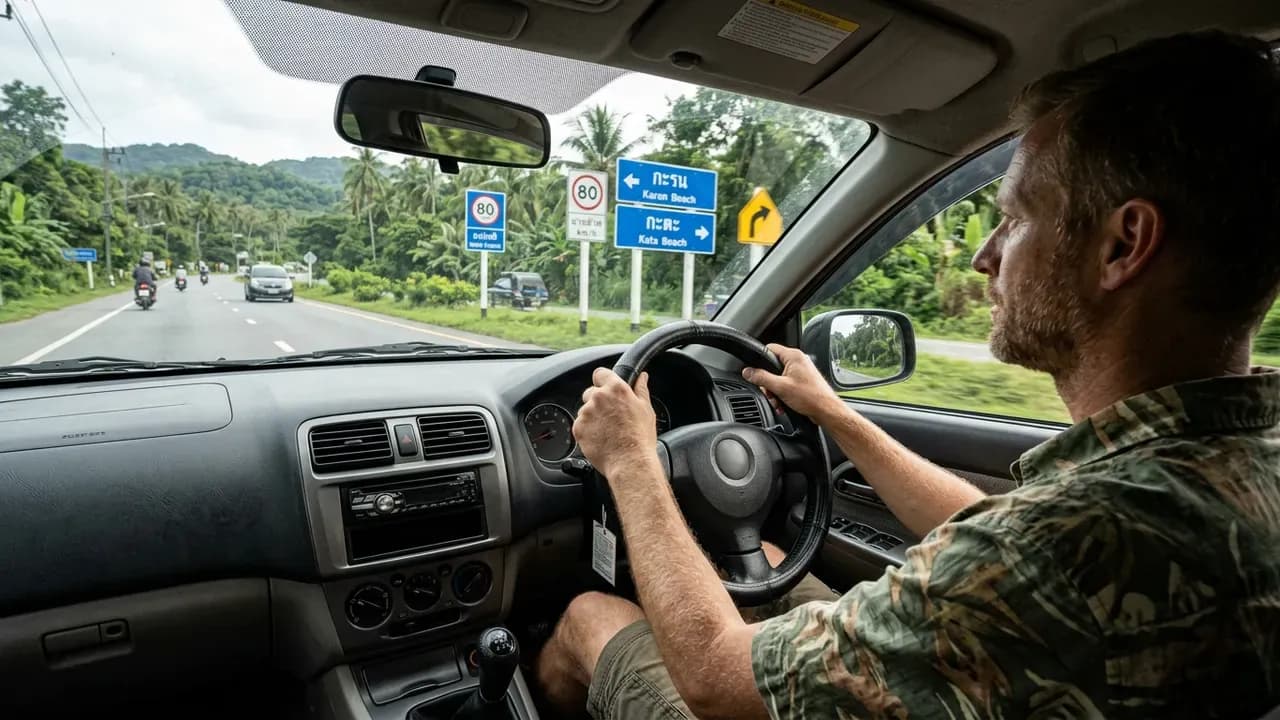
Driving in Thailand presents unique challenges for foreigners. First, remember that traffic drives on the left side of the road — if you are accustomed to driving on the right, be especially careful at intersections, roundabouts, and when pulling onto roads. Second, Thai driving culture differs from Western norms: lane discipline is relaxed, motorcycles weave through traffic, and vehicles may enter from side roads without warning. Use your horn lightly as a courtesy signal rather than aggressively. Third, keep your driving license, passport (or a copy), and vehicle registration accessible at all times. Fourth, use Google Maps for navigation, as Thai road signs can be inconsistent in their English transliterations. Fifth, avoid driving at night on rural roads, as unlit vehicles, pedestrians, and animals on the road create serious hazards. Sixth, during the Songkran festival in April, avoid driving if possible — accident rates spike dramatically during this period. Finally, if you are involved in an accident, do not leave the scene; call the tourist police at 1155 for assistance.
Need help with this?
Our team handles the entire process — documents, preparation, and DLT escort. 98% first-attempt pass rate.