
In This Article
Downloads & related guides
What Is the TM30?
The TM30 is the 'Notification of Residence for Foreigners' — the form through which the person who provides your accommodation tells Thai Immigration that a foreigner is staying at their address. It comes from Section 38 of the Immigration Act B.E. 2522 (1979), which places the duty on the house-master, owner or possessor of the residence, or the hotel manager, not on you. That single fact explains most of the confusion around it: the form is about you, but it is legally somebody else's job to file, and in practice the foreigner is the one who feels it when it is missing. When the notification is accepted, Immigration issues an acceptance slip — usually the stamped lower portion of the paper form, or a printable confirmation if it was filed online. That slip is what everyone means by 'the TM30 receipt'. For a driving licence it matters for one reason: Immigration will not issue the residence certificate the DLT requires until a TM30 for your current address is on file. The TM30 is the first link in the chain TM30 → residence certificate → Thai driving licence, and a missing one is the single most common reason a residence certificate application is turned away.
Who Files It: Landlord, Tenant, Hotel or Condo
The legal filer is whoever controls the premises. If you rent a house or condo, that is your landlord (the owner named in the house registration book, the tabien baan) or their appointed agent. If you stay in a hotel, guesthouse or licensed serviced apartment, the operator files it — hotels do this at check-in from your passport and you normally never see it. In a condominium the juristic office sometimes files for tenants, but usually it is still the unit owner. If you own your own condo, you are the house-master and you file your own TM30. If you stay with a Thai partner or family, the person whose name is on the tabien baan files. As the tenant you cannot file in your own name, but you can do the legwork: a landlord can sign a power of attorney and hand you copies of their ID card and tabien baan so that you submit at the Immigration counter on their behalf, and many landlords simply create the online account once and let the tenant enter the details. If your landlord has never heard of the TM30 — common with individual owners — showing them this page, or asking us to coordinate with them, is usually faster than explaining it from scratch.
The 24-Hour Deadline and the Fine
Section 38 requires the notification within 24 hours of the foreigner arriving at the address. Section 77 of the same Act sets the penalty for a house-master who fails to notify at a fine of up to 2,000 THB; for a hotel manager the range is 2,000 to 10,000 THB. The fine is issued to the filer, not to the foreigner, and offices commonly settle a late residential filing below the statutory maximum — but there is no fixed discount and it varies by office and by how late the filing is. The consequence that actually bites the foreigner is indirect: with no TM30 on file, Immigration will not issue a residence certificate, and some offices will not process an extension of stay until the landlord has filed and paid. A late TM30 is accepted; the fine is paid at the counter and the notification goes on the system the same day. Do not let a landlord's reluctance to pay a small fine block a licence appointment — filing late is still far better than not filing at all.
When You Need a New One (the 2020 Rule Change)
Before mid-2020 the rule was read as 'every time the foreigner comes back', which meant a fresh TM30 after every weekend in another province or every trip abroad. A Ministerial Regulation published in the Royal Gazette on 16 June 2020, effective 30 June 2020, relaxed this: the house-master notifies only the first time the foreigner arrives at the premises. As long as you keep staying at the same address within your rental period and within the validity of your permission to stay or re-entry permit, domestic trips and short trips abroad do not require a new filing. You do need a new TM30 when you move to a different address, when you change to a different unit in the same building, when your landlord changes, and — in practice at most offices — when you re-enter Thailand on a new visa or a new visa exemption, because that is a new permission to stay rather than a return on a re-entry permit. Enforcement of the fine points still varies from province to province, so the safe test before a residence certificate application is simple: is there a TM30 on file that shows your current address and a stay that covers today? If not, file a new one.
How to File Online
The Immigration Bureau's online system is at tm30.immigration.go.th. The account belongs to the house-master, not the foreigner: the owner registers with their Thai ID card number and the tabien baan details of the property (a foreign owner registers with their passport and the condo title or purchase documents), and the account is approved by Immigration before it can be used — approval is not instant, so a landlord who has never registered should start a few days before you need the receipt. Once approved, the owner adds each foreigner by entering the passport bio page details, nationality, visa or entry type, the date of arrival at the address, and uploads a copy of the passport pages and the lease. The confirmation can be printed or saved as a PDF and works as your receipt. Two practical cautions: the system is designed around Thai ID numbers, so tenants cannot register in their own name, and a few Immigration offices still ask to see a stamped paper slip for a residence certificate even when the online record exists. If you know the office you will apply at prefers paper, file in person or ask us to file for you.
How to File in Person (or by Post)
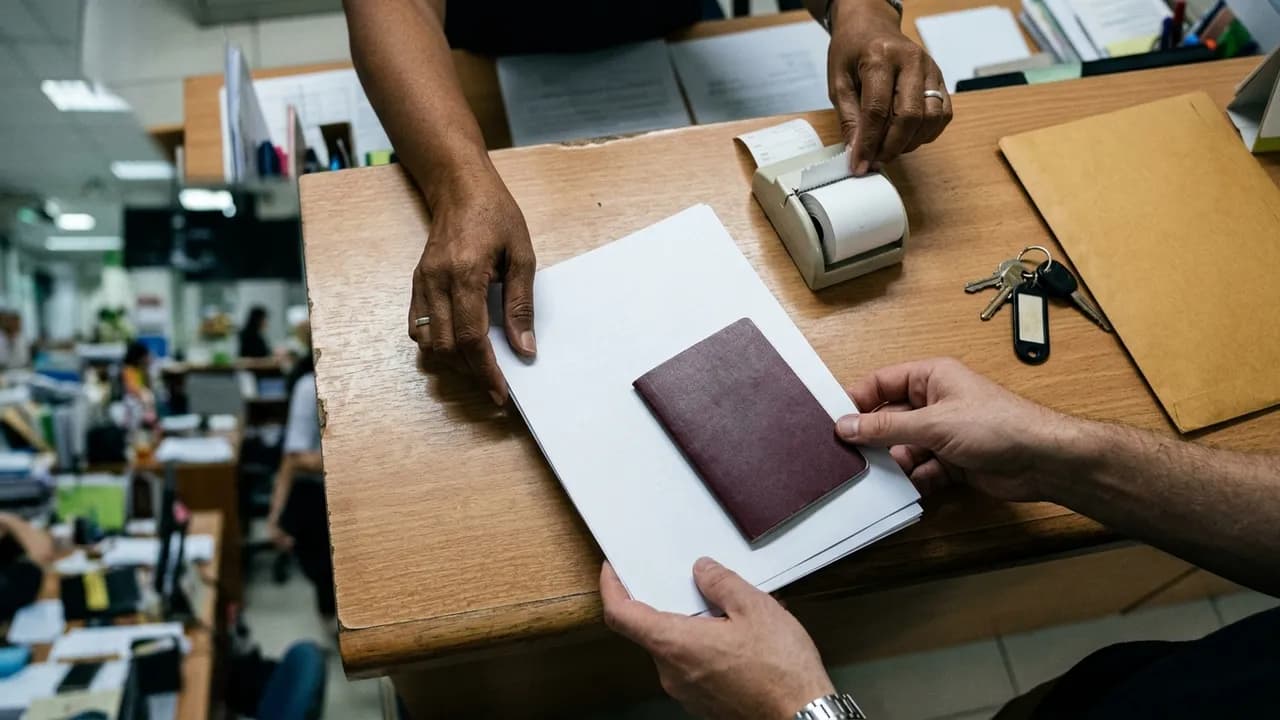
In-person filing happens at the Immigration office for the province where the address is — Chaeng Watthana for Bangkok, Jomtien for Pattaya and the rest of Chonburi, and the provincial office elsewhere. The blank TM30 form can be downloaded from immigration.go.th or picked up at the counter. Bring the completed and signed form, a copy of the owner's Thai ID card and tabien baan (both signed by the owner), a copy of the lease or rental agreement, and copies of your passport bio page, current visa or entry stamp, and your TDAC arrival confirmation (the digital card that replaced the paper TM6 in May 2025). If the tenant submits on the owner's behalf, add a signed power of attorney. The officer checks the copies, stamps the form, and hands back the detachable lower portion — that stamped stub is the TM30 receipt, and Immigration staff often staple it into the passport. It is issued on the spot. Filing by registered post to the same office is also permitted but is slow and gives you no receipt until the office mails it back, so it is a poor choice when a licence appointment is waiting. Our TM30 filing service (300 THB) does the counter visit for you and returns the stamped slip; it is included when we handle the full residence certificate.
Hotel, Condo and Owner-Occupier Cases
Hotel guests: the hotel files at check-in and the record is electronic, so ask reception to print the confirmation for you if you plan to apply for a residence certificate during the stay. Some Immigration offices issue a certificate against a hotel TM30 plus the booking confirmation; Chaeng Watthana in Bangkok is stricter about tourist-status applicants than Jomtien, Chiang Mai or Phuket, so check the office-by-office notes on our residence certificate guide before you go. Rented condo: the unit owner is the filer, and the address on the TM30 must match the lease and the address you will write on the TM.16 residence certificate application exactly — the same building with a different unit number counts as a mismatch. Serviced apartments and long-stay hotels file like hotels. Foreign owner-occupiers: you register the online account with your own passport and title deed, or file at the counter with the same documents plus your chanote or purchase contract. Staying with a Thai spouse or family: the Thai house-master files, and you will need their signed ID and tabien baan copies again later for the residence certificate itself, so make the copies once and keep a spare set.
How to Get a Copy of the TM30 Receipt
Ask the landlord first — they either have the stamped stub or can log in and print the online confirmation. If the landlord filed at the counter and the stub was stapled into your passport, look there; it is small and easy to overlook. If nobody has a copy, an Immigration officer can look the notification up on the system with your passport number; the Immigration hotline is 1178 for general questions, though the lookup itself is done at the counter. If it turns out there is no record at all, the fix is not to search harder but to file a new TM30 now, pay any late fine, and take the fresh slip to the residence certificate counter. Keep a photo of the slip on your phone and one paper copy with your passport copies — the DLT itself does not ask for the TM30, but Immigration asks for it every time you request a residence certificate and, at many offices, for extensions and re-entry permits too.
TM30 → Residence Certificate → DLT
The order matters. Step 1: a TM30 for your current address is on file. Step 2: you apply at Immigration for a residence certificate using the TM.16 application form, with your passport, photos, lease and the TM30 receipt; the fee is 200 to 500 THB depending on the office and the certificate is valid for 30 days. Step 3: you take that certificate, a medical certificate and your passport to the DLT for the licence. Because the TM30 fixes which Immigration office you belong to, it also fixes where you apply — a Bangkok TM30 means Chaeng Watthana, a Pattaya TM30 means Jomtien — and if you genuinely move and file a new TM30, the office moves with you. The 30-day validity of the certificate is why we tell clients to start with the TM30: it is the step with the longest lead time when a landlord has to register an online account, and nothing after it can begin until it is done. If you would rather not chase a landlord, we file the TM30 for 300 THB, or handle the whole chain — TM30, residence certificate and the DLT visit — as one package.
Make sure you are properly licensed
The most important step before driving in Thailand is having a valid license. We handle the entire process for you.