In This Article
Downloads & related guides
- The complete guide to the residence certificate in Thailand — what the certificate is, who can get one, documents, offices, fees, validity
- TM.18 field-by-field guide with a sample completed form — how to fill in each field so it matches your passport and TM.30
- TM.16 form guide and official PDF download — the companion form for the residence certificate
What Is the TM.18 Form?
The TM.18 form is the 'Notification of Residence for Foreigners' used by Thai Immigration. It is sometimes confused with the TM.16 form, but they serve different purposes. The TM.18 is specifically used when a foreigner needs to notify Immigration of their place of residence, typically in connection with certain visa types or when requested by Immigration during official processes. The TM.18 is part of the broader system Thailand uses to track where foreigners are living. While the TM30 is the notification filed by a hotel or landlord about a foreigner staying at their property, the TM.18 is filled out by the foreigner themselves to declare their residence. The form is used less frequently than the TM.16 (which is for requesting a residence certificate), but it is important to understand when it applies. In practice, most foreigners encounter the TM.18 when dealing with specific Immigration requirements related to their visa status or when an officer specifically requests it.
Difference Between TM.16 and TM.18
The TM.16 and TM.18 forms are both related to a foreigner's residence in Thailand, but they serve distinct purposes. The TM.16 is an application form — you submit it to request a residence certificate, which is a document you need for DLT, banks, and other official purposes. The result of a TM.16 submission is a printed, stamped certificate confirming your address. The TM.18, on the other hand, is a notification form — you submit it to inform Immigration of where you are living. It does not produce a certificate; it is simply a declaration on file. Think of it this way: the TM.16 says 'please give me a document confirming my address,' while the TM.18 says 'I am informing you of my address.' The TM30 is yet another form — it is filed by the property owner or manager, not by the foreigner. These three forms — TM.16, TM.18, and TM.30 — form the residence notification ecosystem in Thai Immigration. Most foreigners primarily need the TM.16 (for the residence certificate) and the TM.30 (filed by their landlord).
When Each Form Is Used
The TM.16 is used whenever you need an official residence certificate. The most common scenarios are: applying for a Thai driving license at DLT, opening a Thai bank account, applying for certain permits, or whenever a Thai authority asks for proof of address. You submit the TM.16, pay the fee (200-500 THB depending on the office), and receive a certificate. The TM.18 is used in more specific situations. It may be required when you first register your address with Immigration upon arriving on a long-term visa, when you change your address within Thailand and need to notify Immigration directly, or when an Immigration officer specifically requests it as part of a visa extension or other process. In some cases, the TM.18 is used in conjunction with annual reporting requirements for holders of permanent residence or certain long-term visas. The TM.30 is used by your landlord or hotel to report that a foreigner is staying at their property. Your landlord files the TM.30; you fill out the TM.16 or TM.18 as needed. In daily practice, most foreigners only ever need to deal with the TM.16 for their residence certificate.
How to Fill Out the TM.18 Form
The TM.18 form requires the following information. Your full name exactly as it appears on your passport. Your nationality and country of origin. Your passport number and date of issue. Your date of birth. Your visa type and number. Your date of arrival in Thailand. Your current address in Thailand — include the house or room number, building name, soi (lane), road, sub-district (tambon), district (amphoe), province, and postal code. Write the address in English using block capitals, or in Thai if you can. The name and contact details of the property owner or manager. Your contact telephone number in Thailand. The date you are completing the form. Your signature. Some versions also include space for your occupation and employer details. Fill out every field — leaving blanks may cause the form to be returned. As with all Immigration forms, ensure the address you write matches exactly what is on file through the TM30 system. Discrepancies will be flagged and could delay processing.
Where to Submit the TM.18 Form
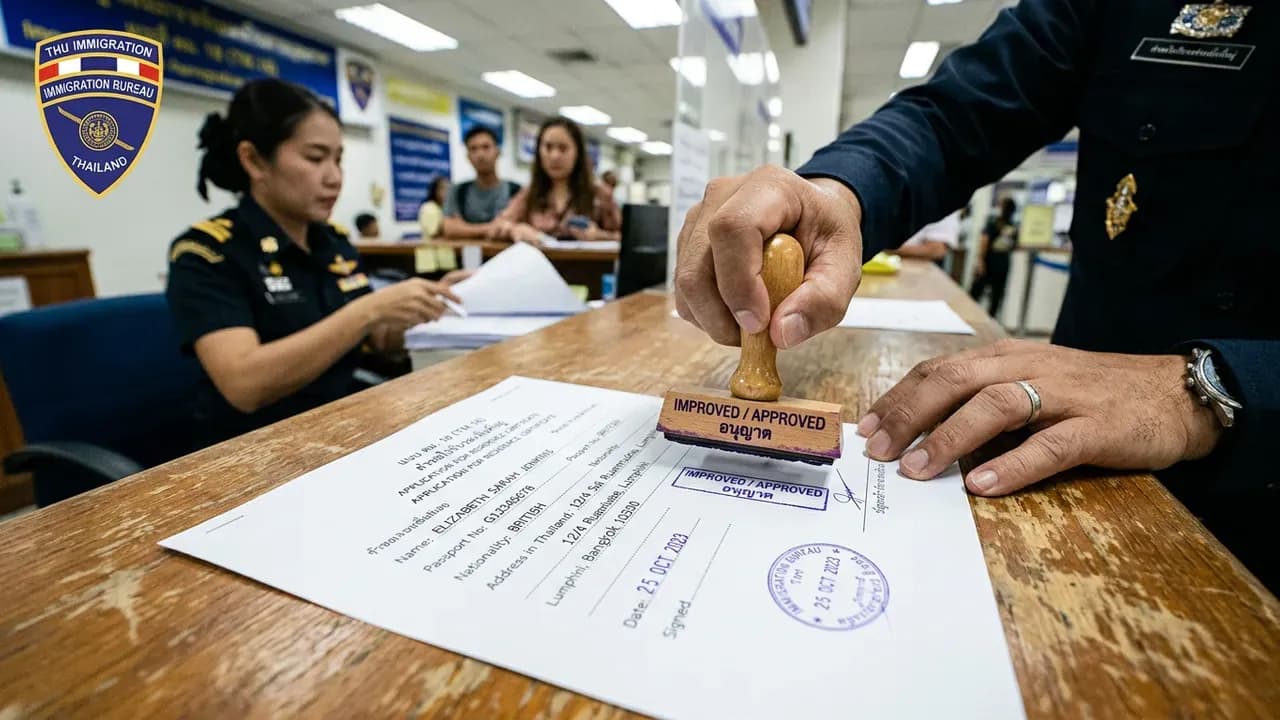
The TM.18 form is submitted at your local Immigration office. In Bangkok, the main office is at Government Center B on Chaengwattana Road. Outside Bangkok, submit it at the provincial Immigration office in your area. Unlike the TM.16, which results in a certificate you can pick up, the TM.18 is simply filed and acknowledged. The officer may stamp your passport or give you a receipt confirming the notification. There is generally no fee for submitting the TM.18 form, unlike the 200-500 THB (by office) charged for the TM.16 residence certificate. Bring your original passport, a copy of your passport's information page, visa page, and most recent entry stamp. Also bring a copy of your lease agreement and TM30 receipt as supporting documents. Some offices may request additional documents depending on your visa type. Processing is usually immediate — the officer reviews the form, checks your records, and files it. If your Immigration office has an online system, check whether TM.18 submissions are accepted digitally, though most offices still prefer in-person submission for this form.
Make sure you are properly licensed
The most important step before driving in Thailand is having a valid license. We handle the entire process for you.